

Certified care
Containment, removal, and prevention for a safer indoor environment. We find the moisture source first, so the problem does not return. Our local team is available 24/7 to stop damage, protect your property, and move recovery forward.
Mold Remediation Services
Address The Growth And The Moisture Behind It.
Mold is often a symptom of a moisture problem rather than an isolated surface issue. Growth may extend behind drywall, beneath flooring, inside cabinetry, or into other porous materials even when only a small area is visible. Cleaning the surface without addressing hidden growth and the original moisture source can allow the condition to continue or return.
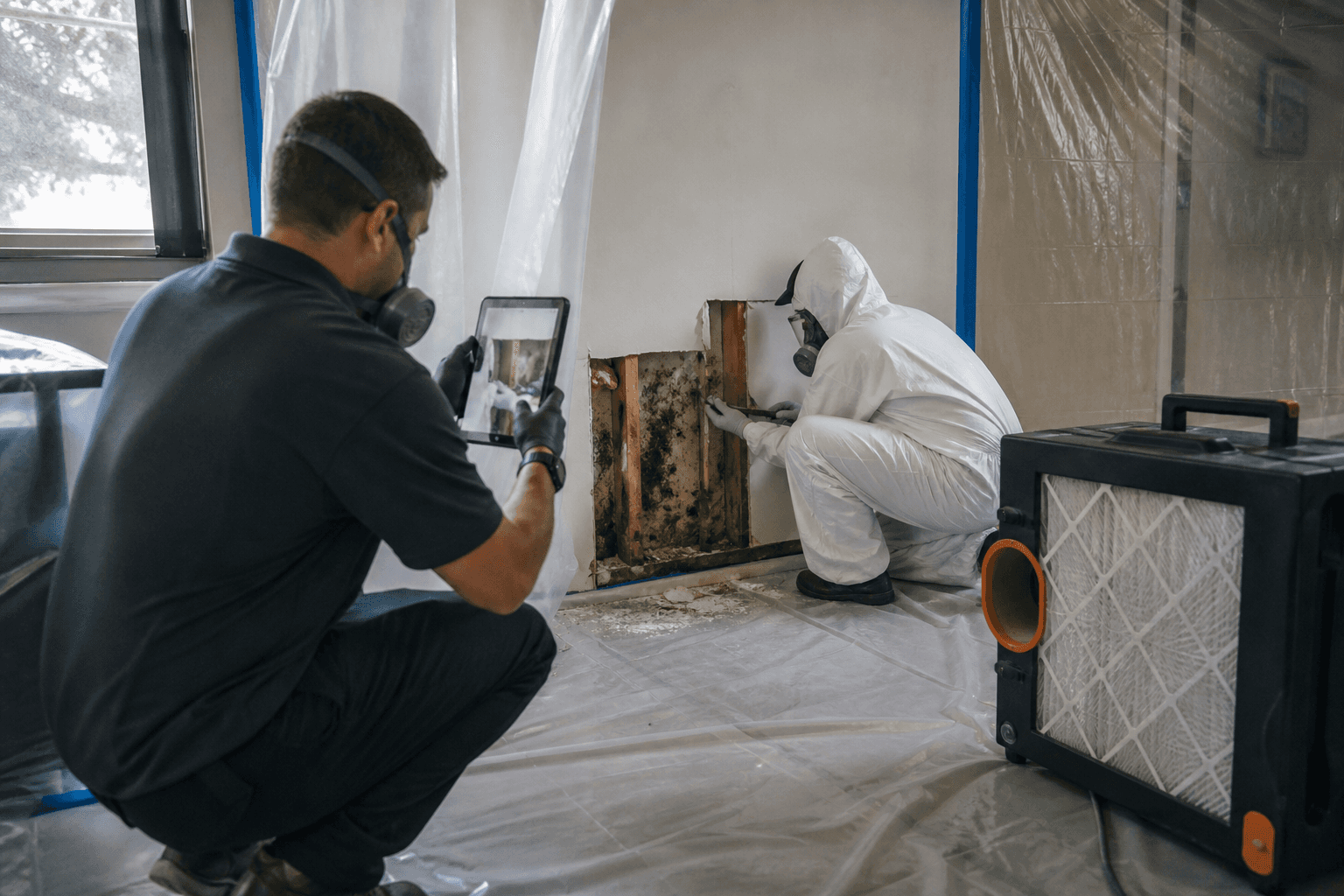
South Shore evaluates the affected area, documents moisture conditions, establishes containment, and uses filtered air controls to keep the work organized. Impacted materials are removed where necessary, remaining surfaces receive detailed HEPA cleaning, and the area is dried and prepared for repairs only after the underlying moisture condition has been addressed.
Available 24/7
Call our local response team. We’ll listen to what happened, explain the immediate priorities, and help determine the right next step.
When To Call
Signs You May Need Mold Remediation.
Not every problem is immediately obvious. These conditions can indicate that professional inspection or restoration is needed.
01
Visible spotting or discoloration
02
Persistent musty odors
03
Past leaks or flooding
04
Condensation and high humidity
05
Recurring staining on finishes
06
Irritation in a specific area
What We Handle
Complete Mold Remediation Services.
Every project is scoped around actual site conditions, with the people, equipment, and repairs coordinated through one accountable team.
01
Assessment And Moisture Mapping
We document visible conditions, evaluate nearby materials, and use moisture readings to help identify the water or humidity supporting growth.
02
Containment
Protective barriers, controlled access, and negative air pressure isolate the work zone and help limit dust and spores from moving into clean areas.
03
Removal And HEPA Cleaning
Affected porous materials are removed under controlled conditions while salvageable framing and hard surfaces receive detailed HEPA vacuuming and cleaning.
04
Drying And Prevention
Leaks, condensation, or humidity concerns are addressed and affected materials are dried before containment is removed and reconstruction begins.
Our Process
A Clear Plan From First Call To Final Review.
The exact work changes by property, but the process stays organized, documented, and easy to understand.
01
Inspect And Define The Area
We document visible conditions, moisture, and the likely extent of affected materials.
02
Correct The Moisture Source
Leaks, humidity, or condensation issues are addressed before remediation is completed.
03
Build Containment
Protective barriers and negative air controls isolate the work zone.
04
Remove And Clean
Affected materials are removed when necessary and remaining surfaces receive HEPA cleaning.
05
Dry, Verify, And Repair
The area is dried, reviewed, and prepared for reconstruction or finish replacement.
Residential Properties
Managed Communities
Businesses And Offices
South Shore Response
Insurance-Ready Documentation
Clear Records At Every Stage.
We organize restoration information so owners, managers, and insurance representatives can understand the conditions, completed work, and next steps.
01
Condition And Damage Photos
02
Moisture Readings And Site Notes
03
Documented Restoration Scope
04
Progress And Completion Records
Emergency Availability
And Fully Insured
Project Communication
Through Completion
Mold Remediation Questions
What To Know About Mold Remediation.
Straightforward answers about safety, timing, restoration work, and what happens after you call.
Can I clean mold with bleach?
Bleach is not appropriate for every material and surface cleaning alone may not address hidden growth or the moisture source.
How do you prevent mold from spreading?
Containment, negative air pressure, HEPA filtration, and controlled work practices limit movement outside the work area.
Does all mold require demolition?
No. The scope depends on the material, extent of growth, moisture condition, and whether surfaces can be cleaned effectively.
How long does remediation take?
Small contained projects may take several days, while larger or concealed conditions require more time.
Can mold return after remediation?
It can return if moisture returns. Correcting leaks, humidity, and ventilation issues is essential.
Related Services


